The War and Treaty Reclaim Country Music's Black Roots
The War and Treaty Reclaim Country Music's Black Roots at BET 2026
- Black artists like DeFord Bailey, Lesley Riddle, and Tee Tot laid the foundation for country music.
- Charley Pride and Darius Rucker broke through, but a long gap in Black representation followed.
- Artists like Mickey Guyton, Beyoncé, and The War and Treaty are now reclaiming country's Black roots.
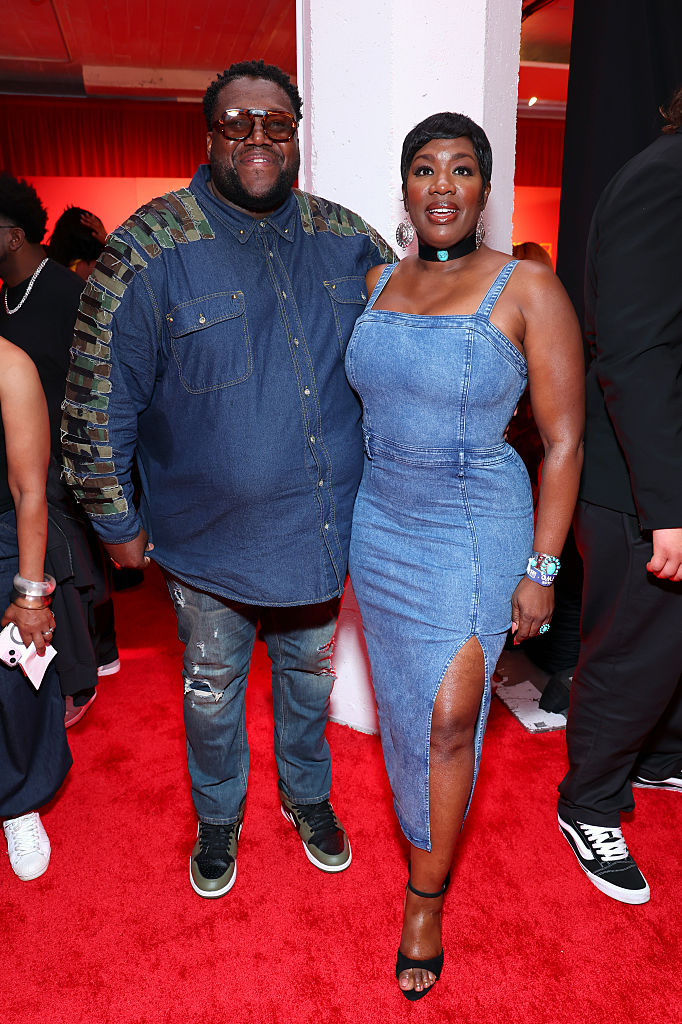
At BET 2026, Michael and Tanya Trotter—known as The War and Treaty—sat down with Jasmine Sanders to discuss Black country music history, their Maryland love story, and their new album, The Story of Michael and Tanya. Their core message: Black artists built country music, and the genre has always been home.
The War and Treaty walked into BET 2026 carrying a message bigger than any single song. Michael and Tanya Trotter, the husband-and-wife duo behind some of the most electric performances in American roots music, sat down with Jasmine Sanders for a conversation that doubled as a history lesson, a homecoming, and a celebration.
The talk touched on everything from Ray Charles to Beyoncé, from a chance meeting in Maryland to a brand-new album that fuses R&B with outlaw country. Underneath it all was one steady truth: Black artists didn’t just join country music—they created the space. This is what that conversation revealed.
How Michael and Tanya Met and Built Their Sound in Maryland
The War and Treaty story begins in Maryland, where Tanya is from. The two met, fell in love, and discovered they shared something rare—a deep musical connection. Tanya recognized early that Michael had an extraordinary gift for songwriting.
“Let me introduce you to some music,” she told him. She played him bands she loved, including sounds from a genre many people didn’t even know existed: Americana. Michael was already drawing from artists and bands that shaped his ear, and together they began to build something of their own.
From there, the couple hit the road. They toured up and down Interstate 95, performing in city after city while people slowly started taking notice of their sound. That early grind—a blend of soul, gospel, and Americana—laid the foundation for the genre-crossing music they make today.
TRENDING: 25 Unforgettable BET Awards Performances
Tanya’s Roots: Willie Nelson, Patsy Cline, and Ray Charles’ Country Album
Tanya’s love of country didn’t start in Maryland. It started in Cleveland, Ohio, in her grandmother’s home.
“My grandmother, her favorite artist of all time was Willie Nelson, Patsy Cline,” Tanya shared. But the record that truly hooked her was Ray Charles’ landmark 1962 album, Modern Sounds in Country and Western Music. Her grandmother was the first person to introduce her to country music, and that album changed everything.
Ray Charles’ decision to record a country album in 1962 was a bold move that shattered musical boundaries. The album spawned chart-topping singles like “You Don’t Know Me” and “Born to Lose,” proving that a Black artist could reinterpret country and reach millions. For a young Tanya, it planted a seed that would bloom decades later.
“I’ve always loved country music,” she said. “I just didn’t know that we were allowed to occupy that space.”
TRENDING: Iconic Black Artist Who Never Won a Competitive BET Award
“We Own That Space”: Black Artists and the True History of Country Music
That feeling—of not knowing whether the space belonged to her—shifted once Tanya got re-educated on country’s real history.
“Once I started to get re-educated, I realized that, oh, we own that. We created that space,” she said. “We own that space.”
The historical record backs her up. Black musicians have shaped country since it first gained popularity in the 1920s:
- DeFord Bailey, a Black harmonica player, was the first performer on the Grand Ole Opry and helped turn Nashville into a country music mecca.
- The Carter Family, often called the “First Family of Country Music,” drew heavily on the playing style of Lesley Riddle, a Black blues and gospel guitarist.
- Hank Williams learned guitar as a boy from Rufus “Tee Tot” Payne, a Black musician.
- The banjo itself has African roots, a fact brought back into the conversation by historians and artists like Rhiannon Giddens and Dom Flemons.
The War and Treaty see themselves as part of that lineage. “Tanya and I are a gentle reminder that we’ve always been here,” Michael explained. “But we’re also a reminder to people who are creatives: you can always return home. You can always return back to what’s yours.”
The Missing Faces: Charley Pride, Darius Rucker, and the Long Gap in Representation
Jasmine Sanders brought her own experience to the table. A longtime country fan dating back to her radio days in the 1990s, she once worked at Country Music Television (CMT) and remembers the silence on screen.
“I would watch CMT all day long. I never saw a face,” she recalled. Between Charley Pride and Darius Rucker, there was a wide gap with almost no Black representation.
The stakes of that gap are real. Charley Pride became the first Black artist to score a number one country record, achieving enormous success through the 1960s and 1970s despite facing prejudice and racial discrimination. Darius Rucker later broke through as one of the first African American country superstars of his generation. But between and around them, the industry kept the door narrow—through decisions about who got charted, who got radio airplay, and which festivals welcomed Black fans.
Sanders described being the only person in many rooms willing to say she loved country music. “And the storytelling is so incredible,” she said, “if you just give it a chance.” That love, paired with the lack of visible faces, makes today’s shift feel personal for fans who waited a long time to see themselves reflected.
The New Wave: Mickey Guyton, Shaboozey, Beyoncé, and More
The faces are finally multiplying. The War and Treaty and Sanders spent part of the conversation celebrating the artists pushing country forward right now.
Mickey Guyton has become one of the genre’s most prominent voices. Shaboozey is making, in Sanders’ words, “incredible leaps and bounds.” And then there’s Beyoncé, whose 2024 Grammy-winning album Cowboy Carter reignited a national conversation about country’s Black roots.
“Shout out to Beyoncé,” Michael said, “opening that door.”
But the wave runs deep. The duo and Sanders rattled off a list of artists carrying the torch:
- Brittney Spencer
- Breland
- Rhiannon Giddens
- Willie Jones
- Cassius Culpepper
“It’s so many of us,” Tanya said. When Sanders asked whether Black artists would ever truly be accepted in country spaces, Tanya offered a powerful reframe: “Those spaces aren’t for us to be accepted.” The point isn’t asking permission to enter a room Black artists helped build. The point is recognizing the truth and opening the borders wider.
BET’s New Country Music Category and What It Means for the Culture
That widening shows up in a major institutional move: the BET Awards now has a country music category.
For the Trotters, this matters far beyond a single trophy. It signals that the culture recognizes how multifaceted it has always been. A BET country music category tells emerging artists that there’s a stage, an audience, and an industry ready to celebrate them.
The conversation also gave flowers to the people behind the scenes—the radio personalities and correspondents telling these stories. Sanders shouted out figures like Marcus Doolin, noting that the movement isn’t only about the artists.
“It’s not just the artist, but it’s the correspondents. It’s the radio personalities,” she said. Telling the history accurately is its own form of advocacy, and it helps the next generation see what’s possible.
Breaking Down the New Album: R&B Meets Outlaw Country
The War and Treaty arrived at BET 2026 with a new album, The Story of Michael and Tanya, and they didn’t hold back describing its sound.
“We’ve infused a lot of R&B with this record,” Michael explained. “We’ve infused a lot of outlaw country styles.” Tanya even has a song where, as she put it, she’s “talking about shooting somebody”—prompting a comparison to country legend Tanya Tucker.
At its heart, the album is about journeys—their own, plus the journeys of family members and friends. “It’s a celebration of musical culture that we grew up listening to,” Michael said. That blend of genres and personal storytelling makes the record both a tribute to their roots and a statement about where Black country music is headed.
Track Highlights: “Don’t Say Goodbye,” “You Can’t Hurt Me Anymore,” and “High Heels”
A few tracks stand out as the emotional anchors of the album:
- “Don’t Say Goodbye” — A song that nods to one of the duo’s favorite groups, channeling a classic R&B influence into their country-soul sound.
- “You Can’t Hurt Me Anymore” — The album’s single, co-written with the legendary Babyface, along with Nashville writers Jesse Alexander and John Randall. The collaboration bridges R&B royalty and country songcraft.
- “High Heels” — A female anthem that closes out the album. “I’m really proud of it,” Tanya said, “and I can’t wait to be able to perform it for the fans.”
Each track reflects the album’s mission: honoring the music they grew up on while expanding what country can sound like.
Full interview here:
The War and Treaty Reclaim Country Music's Black Roots at BET 2026 was originally published on blackamericaweb.com